 Viveka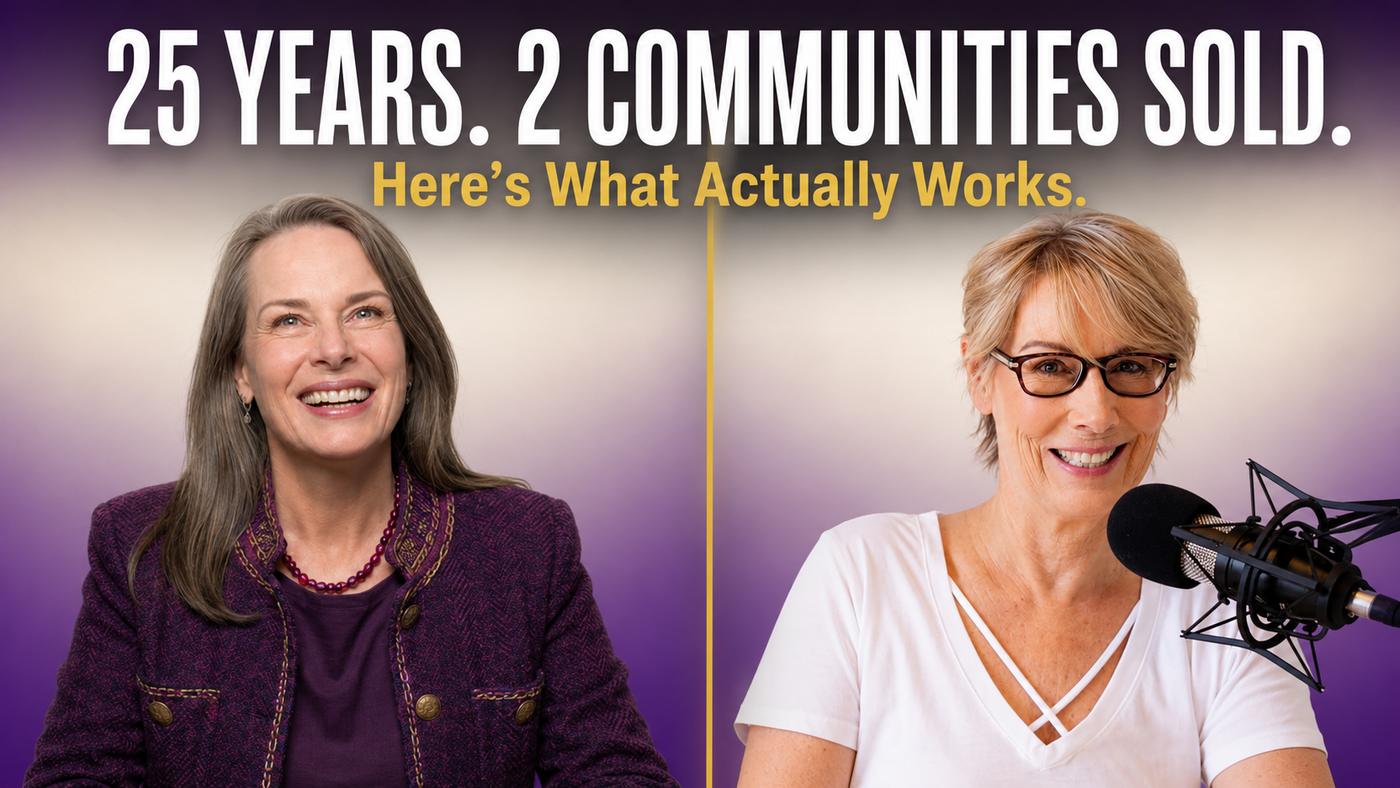
Why does building a community feel so much harder than creating content?
Because most of us built our groups the way we were taught to build an audience — post consistently, share value, stay visible — and that approach is genuinely good at building an audience. A community asks for a different muscle: connecting people to each other and then getting out of the way, and almost nobody teaches that part. So you end up with decades of expertise, a genuinely good group, a steady stream of content going out to it, and a room that still feels quiet.
I hit that wall with WTIC a few weeks ago. The content was good and I knew it, but the room was quiet, and quiet rooms make you doubt even the things you’re sure of. One of my members has a Skool group with seventeen people in it and almost no engagement, and when she said that number out loud I felt it, because seventeen people who don’t talk to each other are really just a list with a name on it. There’s a bigger problem underneath, too: we’re drowning in content and starving for community at the same time. A 2025 Ahrefs study of nearly a million new web pages found that 74.2 percent contained detectable AI-generated content, which tells you how little raw volume means now. Anyone can post forty times a month. What nobody can generate is a room where someone remembers your name.
What does the data actually say about content versus connection?
It says most of your people are quiet, and the quiet ones are reached person to person rather than by volume. A 2024 benchmark from Higher Logic found that only 15 percent of community members actively participate in any given 120-day window. That’s the normal baseline, so the 85 percent who lurk aren’t going to be reached by one more post — they’re reached by someone speaking to them directly.
Retention tells the same story, and it matters most if you run a paid membership. CMX’s benchmark data puts retention in community-driven memberships at 85 to 92 percent, against a median renewal rate across industries of around 85 percent. The communities where members actually connect to each other hold on to people noticeably better than the ones that simply deliver good content. (I’m giving you the numbers because I don’t love making a claim I can’t back up — but they line up exactly with what Kelly Howard has watched happen from the inside of communities she’s scaled from twenty-five members to over a thousand without spending a dollar on ads.)
Won’t my members leave if I let them connect directly with each other?
No — and this is the fear that keeps the most communities small. When people love what you’ve built and have real relationships inside it, they stay; connection deepens loyalty rather than threatening it. What feels like a fear of losing members is usually a fear of losing control, and control is a strange thing to protect at the cost of the very thing that makes people stay.
Kelly has been building, growing, and selling membership communities since 1995, and after twenty-five years her conclusion is that connecting members to each other never once hurt the business — it only grew how loyal people felt toward it. This is where know, like, and trust gets interesting: KLT is something your members feel toward you, sure, but the version that really compounds is the trust they feel toward each other, with you as the person who made the introduction.
How do you grow a community without spending money on ads?
You seed it before you scale it, you simplify how you communicate, you price for proof, and you treat competitors as collaborators. Kelly is publicly running herself from zero to a hundred paying members in a hundred days with no ad spend, using nothing but the strategies she’d teach anyone else, and the specifics are worth stealing.
Seeding means deliberately bringing in a handful of generous connectors early — the members who already get real value and will talk to anyone at any event — instead of waiting for organic growth. Simplifying means noticing that most platforms turn one post into four or five notifications (a feed post, an email, a daily roundup, a weekly one), which is exactly what trains people to stop reading you; cleaner communication beats more of it, every time. Pricing for proof means starting low on purpose when you have no testimonials yet: Kelly’s launching her own membership at $37 a month to remove the friction of trying her, and one of her clients, an Olympic kayaker whose $150 course was getting no signups from a cash-strapped audience, added a $47 taste tier and watched people move themselves up once they trusted it was worth it. And collaborating means going out and connecting with everyone who looks like competition as a potential partner — the one person who spent five years refusing to work with Kelly stayed small while her community kept growing.
What can you actually do this week to make a quiet group less quiet?
Start with the smallest, most human moves, because those are the ones that work. Concretely:
- Audit your notification chaos. Look at everything one piece of content triggers — the post, the email, the digest, all of it stacked — and cut it to one clear touchpoint per update.
- Bring in three or four generous connectors on purpose. Reach out individually to the members who’d talk to anyone at a dinner party and ask them to help welcome new people.
- Pick up the DM. A message that says “thank you for being here — what brought you in?” does more than another post ever will.
- Send a real thank-you, the kind someone keeps. Kelly still hears from a woman who kept a handwritten thank-you card for twenty years.
- Ask your existing members to bring people in, by name. On the call, in real time: who do you know who should be part of this?
- Price for proof, not for vanity. Start low enough that staying makes obvious sense, and raise it as the results pile up — raising a price later is far easier than walking one back.
- Replace one course nobody finished with two hours of live office time a week. If nobody shows, you got work done; if someone shows, they got your full attention.
What’s the actual difference between a content audience and a real community?
A content audience mostly consumes what you make and stays quiet. A real community talks to itself, with you as the connector rather than the only source of every conversation — and that’s the thing that turns members into the people who bring their friends. It’s the same shift I keep coming back to across everything I teach: your expertise matters, but the room only comes alive when you stop being the only voice in it. (If you’re rethinking the systems underneath your visibility, that’s the community piece of what I call your infrastructure in using AI vs building with it.)
My own quiet room got louder the week I stopped trying to fix it with content. If your group feels quiet right now, the move isn’t another post. Ask one member a real question. Introduce two people who’d genuinely like each other. Let your people talk to each other, because the ones who matter most are the ones who’ll bring three more with them.